.webp)


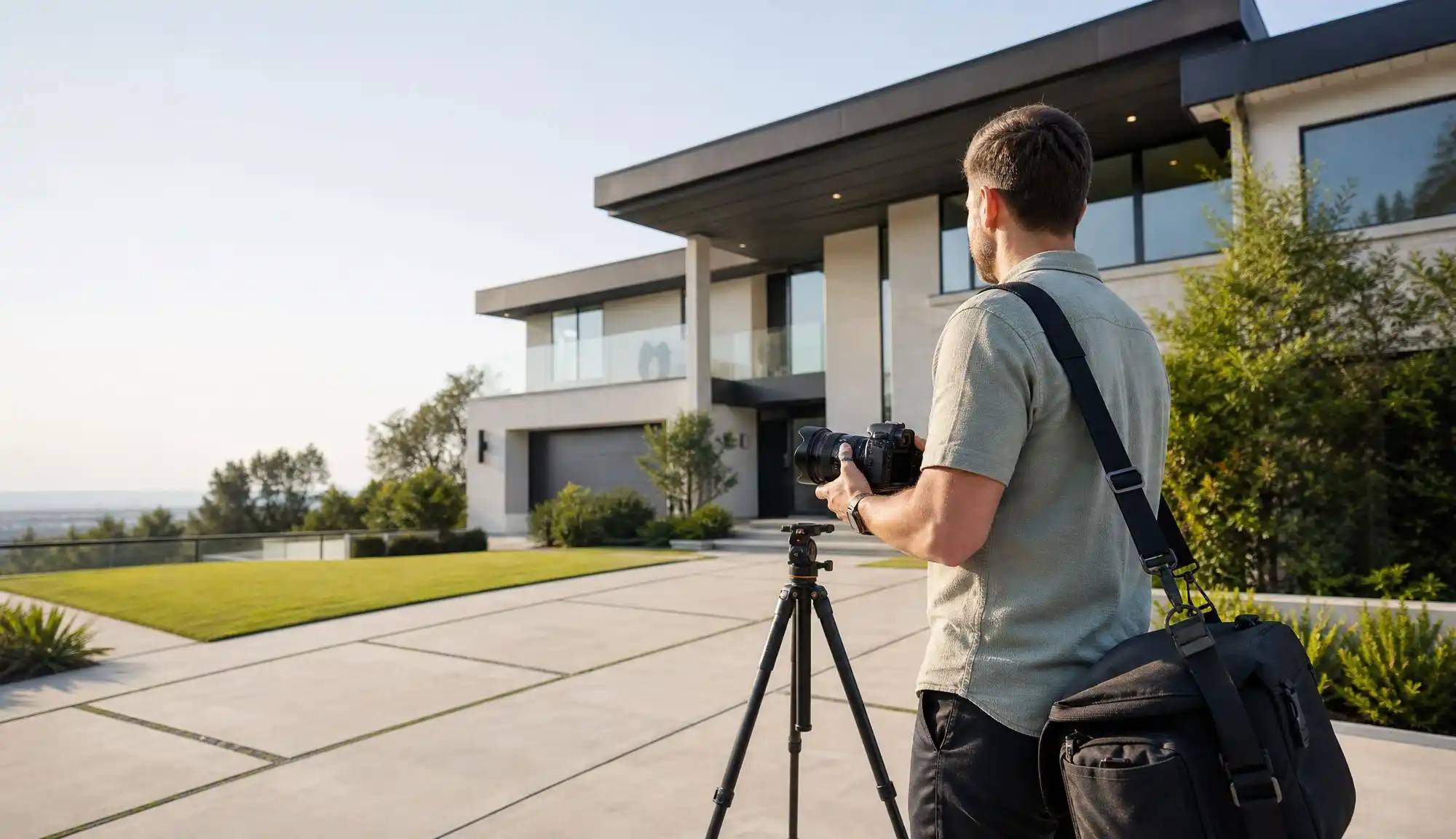
Real estate photography work comes from three places, and only one of them has a raise in it. Contractor platforms like HomeJab and Modern Angles pay roughly $40 to $80 per hour including travel. Staff and contract roles at regional media companies and CoStar pay a salary in the $42,000 to $80,000 range depending on the market. Direct relationships with agents pay per listing and are the only route where you set the price. This article covers who is actually hiring, what each route pays, and the costs the job listings leave out.
Where real estate photography jobs actually come from
Search for real estate photography jobs and Google returns a wall of aggregators. Indeed lists 242 openings in California alone. Glassdoor shows 628 across the United States. LinkedIn shows 169. Upwork has 213 open freelance postings. None of those numbers tell you what the work is like or what you keep after expenses.
Behind the aggregator listings there are only three real structures, and they behave very differently once you are inside them. Understanding which one you are in matters more than the hourly rate on the posting, because each one puts a different ceiling on what you can earn. If you are still working out what to charge, our real estate photography pricing guide covers the rate side in detail. This piece is about where the work comes from in the first place.
Route 1: Contractor platforms
Platforms recruit photographers, sell to agents, handle scheduling and editing, and route jobs to whoever is closest and available. HomeJab, Modern Angles, PropPhoto, EstateShoots, and Evolve on the vacation rental side all run some version of this.
The appeal is obvious. You do not sell, you do not chase invoices, and you can start next week with no portfolio and no client list. For a photographer with a camera and no book of business, this is the fastest path to a paid shoot.
The trade is that the platform owns the client. You never learn who the agent is in a way that lets you keep them. The rate is set centrally and adjusts to what the platform can charge, not to how good your work is. Weekly deposits and automatic payouts, which Modern Angles advertises on its careers page, are genuinely useful, and they are also the mechanism that keeps the relationship transactional.
Treat platform work as what it is: reliable volume while you build something else. It fills a calendar. It does not compound.
Route 2: Staff and contract roles at media companies
Real employment exists in this field, and there is more of it than most photographers assume. CoStar Group hires associate photographers as full-time employees across United States markets. Regional media companies such as Fotosold, Listings In Motion, Flow Photos, and Curb Appeal Photography run their own hiring pages and staff shooters directly rather than through a marketplace.
ZipRecruiter puts entry level real estate photography roles in Florida at $42,000 to $80,000 and Houston roles at $54,000 to $60,000. Those bands are wide because the work varies enormously: some roles are pure residential volume shooting, some include drone and video, and some are commercial portfolio work with a shot list handed to you.
What you get is predictability. Someone else sources the listings, handles the client, and sometimes provides the gear. What you give up is the ability to raise your own rate. A staff photographer gets a review cycle, not a pricing decision.
This route suits photographers who want a stable income while they learn the craft at volume. Shooting 500 houses in a year on someone else's schedule teaches you more about interior lighting and turnaround discipline than two years of occasional freelance work. Our real estate photography tips cover the technique side of that volume.
Route 3: Direct work with agents
Direct work means the agent books you, pays you, and calls you again. It is slower to build and it is the only route where the ceiling moves.
A standard residential photo package sold directly to an agent generally lands between $150 and $400 in United States markets depending on square footage, drone, and turnaround. That is per listing, not per hour, and it is set by you. Add twilight, floor plans, or video and the same visit is worth more.
The catch is that you are now running a business. You are marketing, quoting, scheduling, invoicing, and following up on unpaid invoices. Most photographers who fail at this route fail at the selling, not the shooting. We wrote a full breakdown of that problem in how to get real estate photography clients, and how to structure what you sell in real estate photography packages.
What the job listings leave out
Four costs show up in every real estate photography job and appear in almost none of the postings.
- Drive time. A three shoot day in a spread out market can involve two hours in the car. HomeJab is unusual in stating that its hourly rate includes travel. Most per shoot arrangements do not.
- Edit time. Platforms that handle post production are effectively paying you less per hour than the headline rate suggests, because they removed a task you would otherwise bill for. Direct work means you either edit or you outsource it, and both come out of the listing fee.
- Cancellations. Sellers reschedule. Contractor agreements rarely include a cancellation fee, which means a blocked morning can earn nothing.
- Worker classification. Almost all platform and per shoot work in the United States is 1099 contractor work, not W-2. You are covering self employment tax, your own gear, your own insurance, and any downtime. A $60 per hour contractor rate is not a $60 per hour job.
None of this makes the work bad. It makes the headline numbers misleading. If you want the full income picture rather than the posted rate, we broke it down in how much do real estate photographers make.
The math that actually changes your income
Here is the thing every route above has in common. Your income is a function of houses shot. Take more platform jobs, work more hours. Take a staff role, wait for a review. Even direct work scales with visits until you run out of daylight.
The only variable that breaks that pattern is revenue per visit. You have already driven to the house, already lit the rooms, already shot 30 frames. Everything you can sell from that same set of images is close to pure margin.
Video is the obvious one, and it is the one most photographers skip because filming a walkthrough and cutting it adds an hour on site and two hours at the desk. That is where Amplifiles fits. Amplifiles turns the listing photos you already shot into a 1080p marketing video in about five minutes at $1.50 per image, which is one dollar and fifty cents per image, with voice-over, captions, and your branding. No second visit and no editing timeline.
The practical version: a seven image listing video costs $10.50 to produce. Sell it as a video add-on and it is the highest margin line on the invoice. New accounts start with 1,200 free credits, which is roughly eight images, so the first video costs nothing to test. See the full breakdown on the Amplifiles pricing page.
If you would rather not touch the software at all, our done-for-you service takes the photos you send and returns three finished videos within 24 hours from $29 per listing, which you resell to your agents at your own price.
How this compares to the platforms recruiting you
HomeJab, Modern Angles, PropPhoto, and EstateShoots are all solving the same problem: finding you clients. They are worth using for exactly that. Amplifiles is not competing with them, because it does not send you jobs. It changes what each job is worth by adding a deliverable to work you already did. A photographer can take platform shifts for volume and still raise their own per listing revenue by selling video from the same image set.
The practical test is simple. If a platform pays you $75 per hour and takes two hours per listing, that listing is worth $150 to you and nothing more. If you sell the same agent a listing video from the photos, the visit is worth $150 plus the video fee, and the marginal production cost is a few dollars. See real estate video examples before you price it.
Frequently Asked Questions
How much money do real estate photographers make?
It depends entirely on which of the three routes you are in. Contractor platforms in the United States generally pay $40 to $80 per hour including travel. Staff and contract roles are commonly posted at $42,000 to $80,000 per year depending on the market. Direct work with agents typically runs $150 to $400 per listing, and that is the only route where you set the number.
Can you get real estate photography jobs with no experience?
Yes, and contractor platforms are the usual entry point because they screen on output quality rather than on a client list. Most will ask for sample interiors, not references. Shoot a friend's home, a rental, or your own place, get the verticals straight and the windows exposed, and apply. Regional media companies also hire assistants and second shooters with limited experience.
Are real estate photography jobs remote?
The shooting is never remote because someone has to stand in the house. Editing is. A meaningful share of the listings you see labeled remote are post production roles for editing companies, or virtual assistant work supporting a photography business. If you want location independent income in this field, editing and media production is where it exists.
Is being a real estate photographer worth it?
It is worth it if you build toward direct client relationships and sell more than one deliverable per visit. It is a hard living if you stay on platform rates indefinitely, because your income is capped by how many houses you can physically reach in a day. The photographers who do well treat the shoot as the start of the invoice, not the whole of it.
How do photographers add video without filming?
By generating it from the stills they already captured. Amplifiles produces a 1080p listing video from uploaded photos in about five minutes at $1.50 per image, with voice-over, captions, and branding applied automatically. That removes the on site filming time and the editing timeline that stop most photographers from offering video at all. See how Amplifiles works for photographers.
Final Thoughts
Take the platform work if you need a calendar filled this month. Take the staff role if you want to learn at volume with a predictable paycheck. But do not mistake either one for a career trajectory, because in both cases someone else owns the client and sets the rate. The route that compounds is direct work, and the fastest way to make direct work pay is to raise what a single visit is worth rather than adding visits.
We built Amplifiles because photographers kept telling us the same thing: agents want video, but filming and editing it costs more time than the job is worth. Our platform turns listing photos into professional 1080p marketing videos in about 5 minutes, with voice-overs, captions, and branding. No filming or editing required.
Browse real estate video examples to see what a delivered listing video looks like before creating one. Or jump straight to how Amplifiles works for photographers and start with your 1,200 free credits.