.webp)


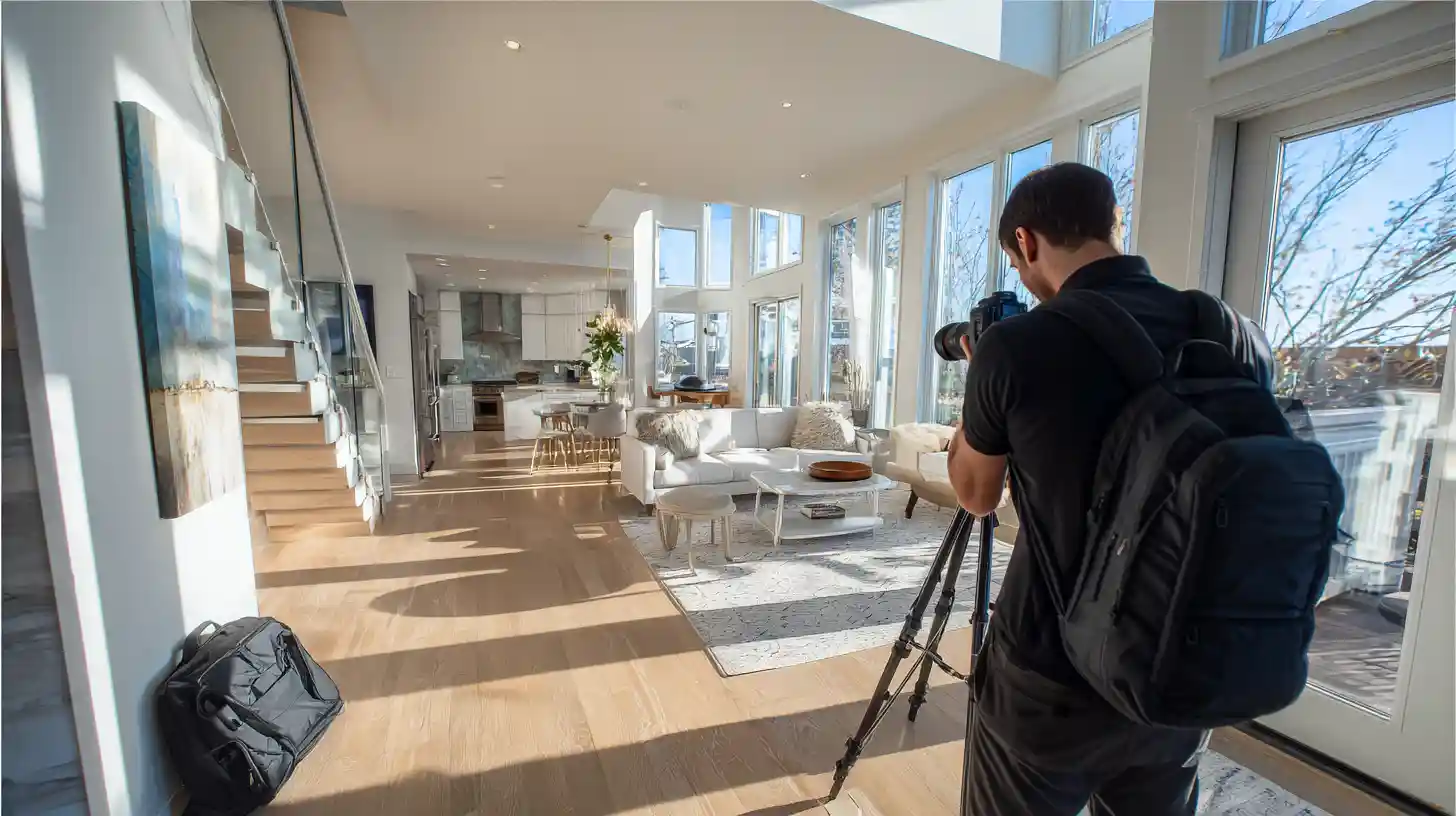
The fastest way to improve your real estate listings is to improve your photos. According to the National Association of Realtors, 100% of home buyers used the internet during their search in 2024, and photos are the first thing they evaluate. Bad lighting, cluttered rooms, and awkward angles cost you showings before the listing description even gets read.
These twelve real estate photography tips are the ones that actually move the needle. They come from what top-producing agents and professional photographers do on every shoot, not from generic advice about "using natural light." We also cover how to turn your best photos into listing videos using AI tools like Amplifiles, which converts listing photos into professional 1080p marketing videos in about 5 minutes.
Why Great Listing Photos Drive Faster Sales
Redfin found that homes photographed with professional equipment sold for $3,400 to $11,200 more on average — clear evidence that professional photography is worth the investment. VHT Studios reported that professionally photographed homes sell 32% faster than those with amateur photos. These are not marginal gains. For an agent handling 15 to 20 transactions per year, better photography directly translates to higher commissions and shorter days on market.
The gap widens further when you add video. Listings with video receive 403% more inquiries than those without, according to the National Association of Realtors. That is why the best agents treat photography not as a checkbox but as their primary marketing investment. Great photos feed everything downstream: MLS listings, social media posts, email campaigns, and listing videos.
12 Real Estate Photography Tips for Better Listings
1. Shoot at the right time of day
Schedule your shoot for mid-morning or late afternoon when natural light is even and warm. Avoid midday when harsh shadows cut across rooms and exteriors. For west-facing homes, morning light fills the front without blowing out windows. For east-facing homes, afternoon works better. Stuck with a midday shot? You can change the time of day before turning the photo into a video.
2. Use a wide-angle lens, but not too wide
A 16 to 24mm lens on a full-frame camera captures enough of the room to feel spacious without making it look distorted. Anything wider than 14mm warps doorframes and furniture, which makes buyers suspicious that rooms are smaller than they appear. Phone cameras in 0.5x ultrawide mode often push past this threshold.
3. Follow the three-wall rule
Position yourself in a corner so you capture exactly three walls in each interior shot. This gives the viewer a sense of the room's full shape and depth. Shooting only two walls makes rooms feel flat. Shooting four walls (from dead center) creates a tunnel effect that shrinks the space visually.
4. Stage before you shoot
Remove personal items, pet bowls, trash cans, and excess clutter. Straighten cushions, towels, and decorative items. Replace burned-out bulbs. These 15-minute fixes make a bigger difference than any editing technique. The rule among staging professionals is simple: if it would not appear in a hotel room, remove it.
5. Turn on every light
Switch on all lamps, overhead fixtures, and under-cabinet lights before shooting. Mixed light sources add warmth and depth to interior photos. In kitchens, the combination of overhead recessed lighting and under-cabinet strips eliminates shadows on countertops, which is one of the most common problem areas in listing photos.
6. Use a tripod for every interior shot
A tripod at chest height (roughly 48 to 52 inches) produces the most natural perspective for interior rooms. It also allows slower shutter speeds in low-light conditions without introducing camera shake. Handheld shooting introduces subtle tilts that make walls look crooked, which requires correction in post-processing.
7. Shoot vertical for social media, horizontal for MLS
MLS platforms display horizontal images. Instagram, TikTok, and Facebook Stories perform better with vertical content. Shoot both orientations for every key room so you have assets ready for all channels. This takes an extra 30 seconds per room and saves hours of cropping later.
8. Bracket your exposures
Real estate interiors have extreme dynamic range. Windows blow out when the room is properly exposed. HDR bracketing (three to five exposures merged in editing) solves this by balancing bright windows with darker interior spaces. Most modern cameras have an auto-bracket mode that captures the full range in one shutter press.
9. Edit for accuracy, not drama
Correct white balance, straighten verticals, and remove minor distractions. Do not over-saturate grass, replace cloudy skies with fake blue ones, or make rooms appear significantly brighter than reality. Buyers who show up expecting the edited version and find something different lose trust immediately. The goal is an honest representation at its best.
10. Capture the exterior at twilight
Twilight shots (20 to 30 minutes after sunset) with interior lights on are the single most effective hero image for luxury and mid-range listings. The warm glow against a blue sky creates an emotional response that daytime exteriors rarely match. This one shot often becomes the lead image on MLS, social media, and professional photography packages.
11. Do not skip the details
Close-up shots of fixtures, countertop materials, hardware, and architectural details help buyers connect with the quality of the home. A wide shot of a kitchen tells you the layout. A close-up of the quartz waterfall island tells you the finish level. Include three to five detail shots per listing alongside your standard room photos.
12. Plan your shot list before arriving
Walk through the property mentally using the listing sheet and create a shot list: exterior front, exterior back, every bedroom, every bathroom, kitchen (two to three angles), living areas, and any standout features. A planned shoot takes 45 minutes. An unplanned shoot takes 90 minutes and still misses key angles.
Turn Your Listing Photos into Video
Once you have strong listing photos, the next step is turning them into video content. Listings with video receive significantly more engagement across MLS, social media, and email campaigns. For real estate photographers, this also creates an easy opportunity to expand your photography packages by offering video as a simple add on. The challenge has always been that producing a listing video traditionally required hiring a videographer or spending hours learning editing software.
Amplifiles is an AI-powered real estate video maker that turns listing photos into branded marketing videos. Upload your best shots and receive a 1080p video with voice-over, captions, and your branding in about 5 minutes. Amplifiles charges $1.50 per image and includes 1,200 free credits for new users, which means you can create a video from an 8 image listing before spending anything.
Unlike general-purpose video tools such as Animoto or InVideo, which require manual sequencing and editing, Amplifiles is purpose-built for real estate. It automatically arranges your photos into a cinematic walkthrough, generates property-specific narration, and outputs a video formatted for MLS, Instagram, YouTube, and email. There is no timeline to drag clips around on and no editing skills required.
Browse real estate video examples to see what a finished listing video looks like. Many real estate photographers now offer video as an add on to their photography packages, since creating a listing video typically takes less than 10 minutes once the photos are ready while increasing listing engagement.
Frequently Asked Questions
What is the 3-3-3 rule in real estate photography?
The 3-3-3 rule is a composition guideline that suggests including three types of elements in each photo: three points of interest, three layers of depth (foreground, middle ground, background), and three sources of light. This creates visually balanced and engaging listing photos that hold buyer attention longer than flat, single-dimensional shots.
What is the 20-60-20 rule in real estate photography?
The 20-60-20 rule refers to image composition where approximately 20% of the frame shows the ceiling, 60% shows the walls and furnishings, and 20% shows the floor. This ratio produces the most natural and spacious feeling in interior room shots. Adjusting your tripod height to chest level (48 to 52 inches) typically achieves this balance automatically.
What makes a good real estate photographer?
A good real estate photographer combines technical camera skills with an understanding of how buyers evaluate properties online. They know how to manage mixed lighting, use HDR bracketing, stage rooms for the camera, and deliver edited photos within 24 hours. The best photographers also offer complementary services like drone photography and listing videos. Agents who need video without hiring a separate videographer use tools like Amplifiles, which converts listing photos into professional marketing videos automatically.
What is the 3 wall rule in real estate photography?
The 3 wall rule means positioning your camera in the corner of a room so that exactly three walls are visible in the frame. This gives buyers the best sense of room size, layout, and flow. Shooting only two walls makes rooms feel smaller, while attempting to capture all four walls from the center creates a distorted tunnel effect.
Can I turn my listing photos into a video?
Yes. AI-powered tools now make it possible to convert listing photos into professional marketing videos without filming or editing. Amplifiles turns your listing photos into 1080p branded videos with voice-over and captions in about 5 minutes. You upload your photos, the AI sequences them into a cinematic walkthrough, and you receive a finished video ready for MLS, social media, and email campaigns.
Final Thoughts
Better listing photos are the highest-ROI investment most agents can make. The twelve tips above cover what actually matters: timing, composition, lighting, staging, and honest editing. Master these fundamentals and your listings will stand out in every search result and social feed.
We built Amplifiles because great photos deserve to become great videos. Our platform turns listing photos into professional 1080p marketing videos in about 5 minutes, with voice-overs, captions, and branding. No filming or editing required.
Browse real estate video examples to see what a delivered listing video looks like before creating one. Or jump straight to how Amplifiles works for photographers and start with your 1,200 free credits.