



Instagram is testing long-form video again. The format is called Features: horizontal videos up to 90 minutes, with short Reels that link to the full video. It is a limited test, so most real estate agents cannot upload one yet. The right move today is to make a horizontal version of every listing video next to the vertical one, because that file already earns its keep on the MLS, Zillow, YouTube and your website, whether Features succeeds or not.
At Amplifiles we turn listing photos into video in four formats from one project, so we look at this news from the production side. This article covers what Instagram confirmed, what is still unknown, and a plan that costs you nothing if Instagram changes course. For where each format belongs once it is made, see our real estate listing video guide.
What Instagram announced, and what it did not
On October 26, 2026, Instagram head Adam Mosseri and product lead Tessa Lyons announced two tests, reported by Tubefilter and The Next Web among others.
- Features. Horizontal videos up to 90 minutes long. They appear in the main feed and on the Explore page, and the Instagram TV app will give them priority.
- Clips as Reels. A creator cuts short segments from a Feature and posts them as normal Reels. Each clip links to the full video. Several outlets report a limit of eight Reels per long video.
Mosseri said he had been against long-form video on Instagram for years, and that the company is now "very committed to it long term." That is a real change of direction. It is also still a test, and four things are not settled.
- Access. The test runs with a small group of creators in the United States and Brazil. Instagram plans to expand it to tens of thousands of US creators over the coming months. There is no date for everyone else, and nothing specific about business accounts.
- Minimum length. Instagram has published a maximum of 90 minutes. It has not published a minimum.
- Money. Creators get no share of ad revenue from Features for now, according to Variety.
- Reels. They are not going anywhere. Instagram describes Reels as the way people discover the long video, not as something Features replaces.
Interest is real, though. US Google searches for "instagram long form video" went from about 30 in September 2026 to 2,400 in October, based on Google keyword data we pulled through DataForSEO. Agents are asking the question. Most of the answers so far come from general creator media, written for podcasters and comedians.
Why horizontal matters more for listings than for most content
A podcaster can frame a talking head in any shape. A listing cannot be reframed that easily, because listing photos are shot wide. Most cameras produce a 3:2 landscape photo, and that shape decides how much of the room each video format can show. A vertical 9:16 Reel keeps about 38% of the photo. A horizontal 16:9 video keeps about 84%.
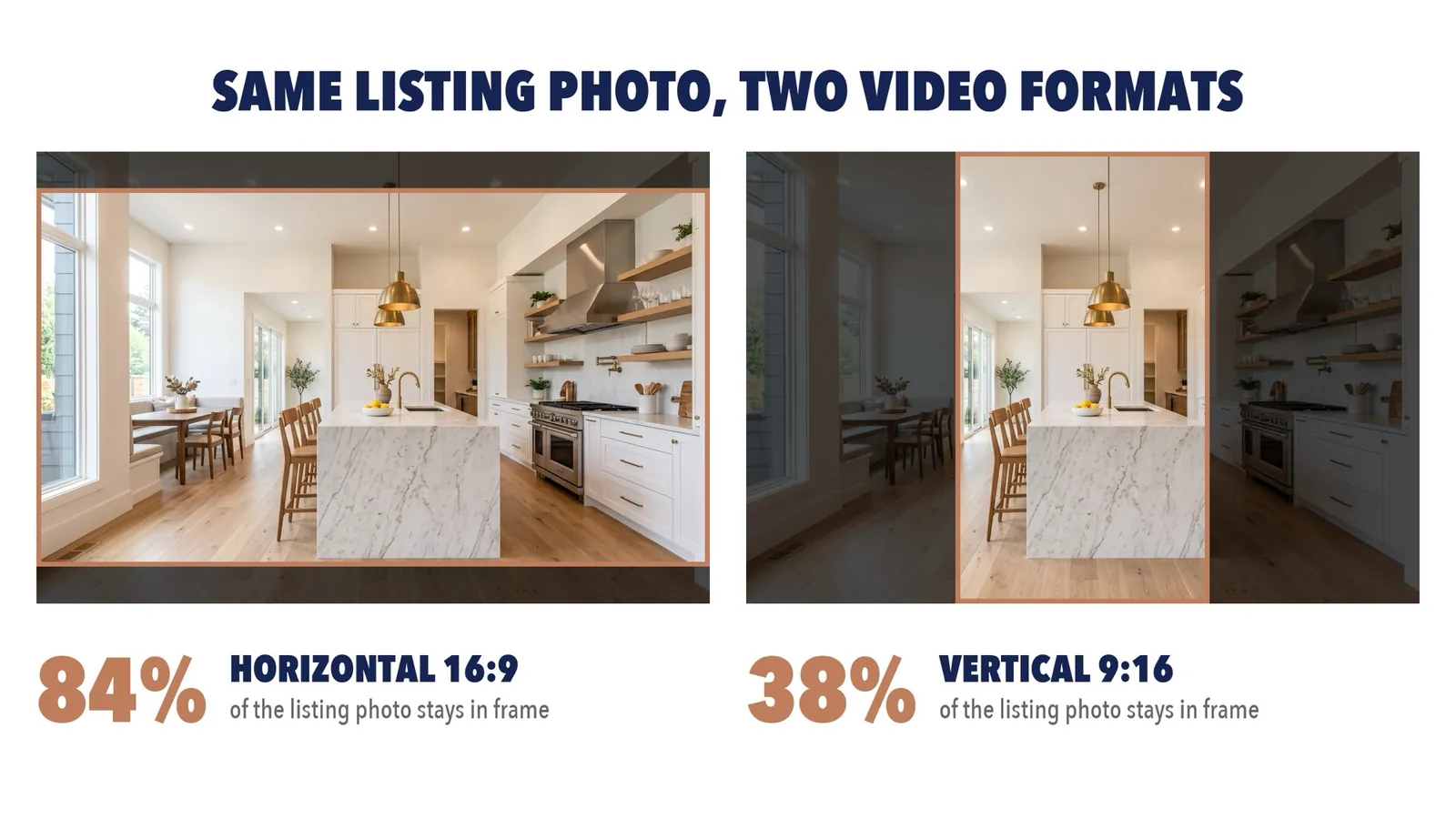
Here is the same math for all four formats we export.
| Format | Share of a 3:2 photo shown | Where it goes |
|---|---|---|
| Horizontal (16:9) | About 84% | MLS, Zillow, YouTube, website, Instagram Features |
| Square (1:1) | About 67% | Feed posts and square ad placements |
| Portrait (4:5) | About 53% | Instagram and Facebook feed posts and ads |
| Vertical (9:16) | About 38% | Reels, Stories, TikTok |
We see the effect in every project. A wide kitchen photo shows the island, the range wall and the window in one frame. In a vertical Reel you get to pick one of the three. That is why the Amplifiles editor saves the crop separately for each format: the vertical version needs a decision on every clip, and the horizontal version does not.
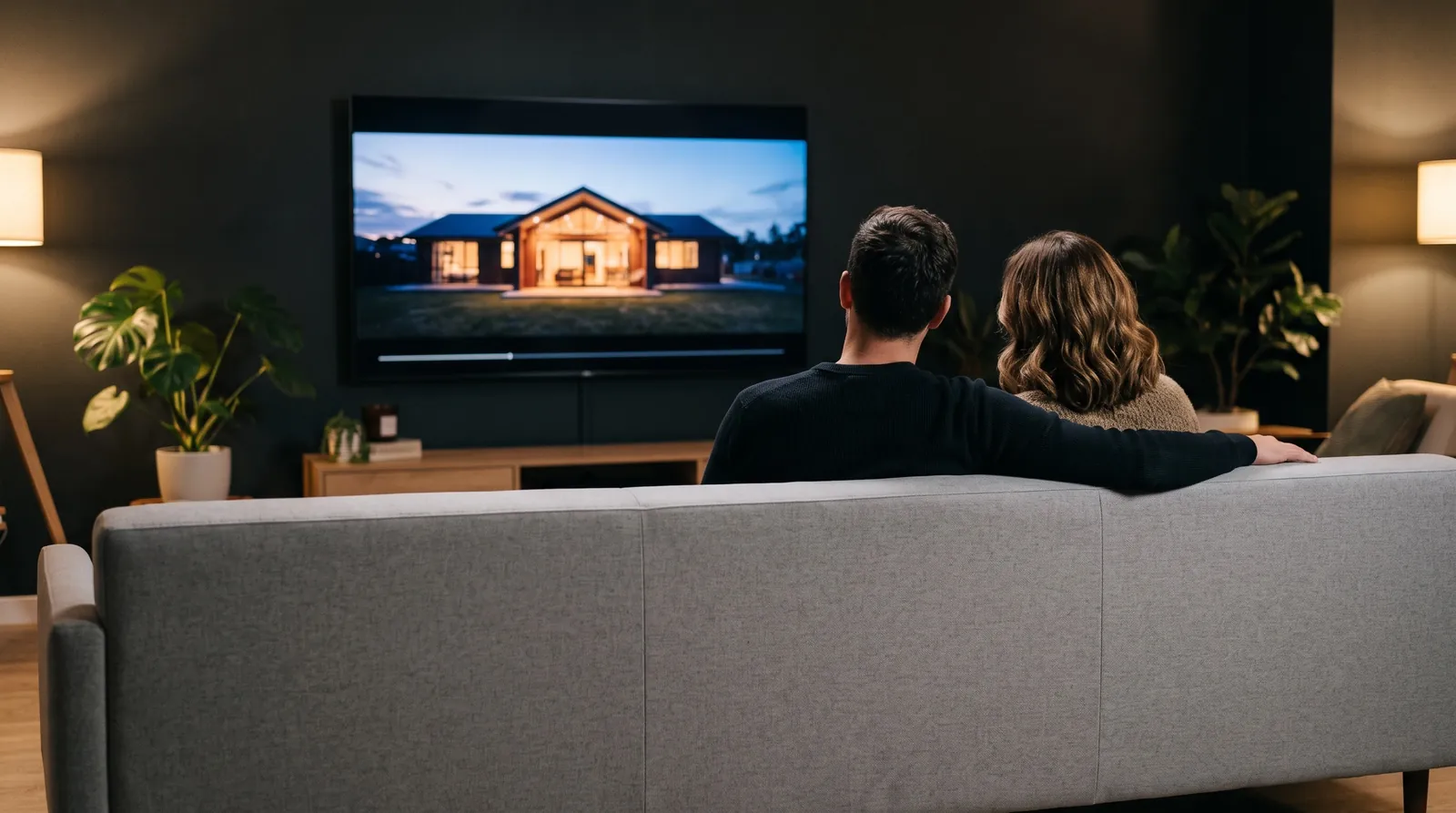
Vertical still wins for reach, and nothing in this test changes that. What changes is that Instagram may soon have a place for the version of the listing that shows the whole room. With the TV app in the picture, that version could play on a living room screen, where two people deciding on a home can watch it together.
The IGTV lesson: do not build for one feature
This is Instagram's second attempt at long video. IGTV launched in 2018 as a vertical-only format and was shut down in 2022. Agents and videographers who produced long vertical videos for it ended up with files that fit nowhere else.
The difference this time is the shape. A Feature is horizontal 16:9, the same shape as a YouTube video, an MLS video, a Zillow upload and the player on your website. So the insurance is already built in, as long as you follow one rule: make nothing for Features that you would not post somewhere else today.
That rule takes the risk out of the decision. You are not betting on a test. You are making the horizontal listing video you should have anyway, and Features becomes one more place to put it if the option shows up in your account.
How to get a listing ready for Features today

- Make the horizontal version first. Upload the listing photos to Amplifiles and each photo becomes a clip with a camera move. It costs $1.50 per image (one dollar and fifty cents) and takes about 5 minutes, so a 20-photo video is $30. If you would rather film, the same order applies: shoot wide, then crop for vertical.
- Set the length on purpose. In Amplifiles a clip plays for 2.5 seconds by default, so 20 photos give you about 50 seconds. Set every clip to 5 seconds and the same photos run 100 seconds. Slow the playback speed to 0.60x and a clip can run about 8.3 seconds, which suits a calm tour on a big screen. Do not pad beyond that. Instagram has published no minimum length, and a two-minute tour people finish is worth more than a ten-minute one they leave.
- Export the vertical version from the same project. Extra formats in standard 1080p are free. Go through the clips once and set the vertical crop on the ones where the default framing cuts off the best part of the room.
- Cut the Reels as trailers, not as the tour. If the reported limit of eight linked Reels holds, plan three to five per listing: the exterior, the kitchen, the best room, the view or yard. Each one should give a reason to watch the full video. Our guide on how to make real estate Reels covers hooks and structure.
- Post each file where it works now. Vertical goes to Reels. Horizontal goes to YouTube, your website and the listing portals. Here is how to add video to a Zillow listing. For the MLS, use a clean version with the original photos, because many MLS systems do not allow visibly altered imagery such as added people.
- Check your upload screen once a month. When Features reaches your account, the horizontal file is ready to upload and the Reels you already posted show you which clips to link.
Amplifiles exports a listing video in horizontal 16:9, vertical 9:16, portrait 4:5 and square 1:1 from one project, so the long version and its Reels come from the same set of photos.
What belongs in a long video besides the tour
A listing tour made from photos is one or two minutes long. That is fine for a Feature, but it is not the only use. BAM suggests starting with videos agents already have on YouTube: full tours, monthly market updates and neighborhood guides.
We agree with the list and would add one filter. Long video works when the viewer is in the middle of a decision. A buyer deciding whether to book a showing will watch a full tour. A family relocating will watch twelve minutes about one neighborhood. A seller deciding when to list will watch a market update. A long video with no decision behind it is a short video that did not get edited.
The formats also combine. A neighborhood guide can open with clips from listing videos you have already made in that area, and a market update can use them as cutaways. If you want more formats to test, our Instagram playbook for real estate agents has 20 ideas.
Filming, hiring or using photos: three ways to get the horizontal tour
You can film the walkthrough on a phone, hire a videographer, or build the video from the listing photos you already paid for. We compare the three in our guide to real estate video tours. For this purpose the question is narrower: which method gives you both a horizontal and a vertical version for every listing, not just the expensive ones?
That is where photos have the edge. Every listing has them, and a video made from photos costs the same whether the home is a starter condo or a waterfront estate. If you do not want to make it yourself, Done-For-You starts at $39: our editors build the video from your photos and deliver all four formats within 24 hours. You can check current rates on the pricing page.
Frequently Asked Questions
Can real estate agents upload Instagram Features now?
Most cannot. As of November 2026, Features is a test with a small group of creators in the United States and Brazil, and Instagram plans to expand it to tens of thousands of US creators over the coming months. There is no announced date for a general release.
How long should a real estate video be for Instagram Features?
Instagram allows up to 90 minutes and has not published a minimum. A listing tour of one to three minutes is enough. Save longer runtimes for neighborhood guides and market updates, where the viewer has a reason to keep watching.
Are Instagram Reels going away?
No. Instagram says Reels remain central, and the Clips as Reels test uses them to send viewers to the full video. Keep posting vertical Reels. They are still how new people find your listings.
Should I make listing videos horizontal or vertical?
Both. A vertical 9:16 video shows about 38% of a standard 3:2 listing photo and a horizontal 16:9 video shows about 84%. Vertical gets reach on Reels, while horizontal shows the whole room and fits the MLS, Zillow, YouTube and Instagram Features.
How do I make a horizontal listing video without filming?
Use the listing photos. Amplifiles turns each photo into a clip with a camera move for $1.50 per image and exports horizontal, vertical, portrait and square versions from one project. A 20-photo video costs $30 and is ready in about 5 minutes.
Final Thoughts
Instagram may or may not make long video work this time. You do not need to guess. A horizontal version of each listing video is useful today, and it is the exact file Features will ask for if the option reaches your account. Keep the Reels going, add the horizontal version, and you are ready either way.
We built Amplifiles because agents need video for every listing, in every format, without a shoot day. Our platform turns listing photos into professional 1080p marketing videos in about 5 minutes, in four formats from one project. No filming or editing required.
Browse real estate video examples to see what a finished listing video looks like. Or see how Amplifiles works for real estate agents and start with 1,200 free credits, enough to animate about 8 photos.