.webp)


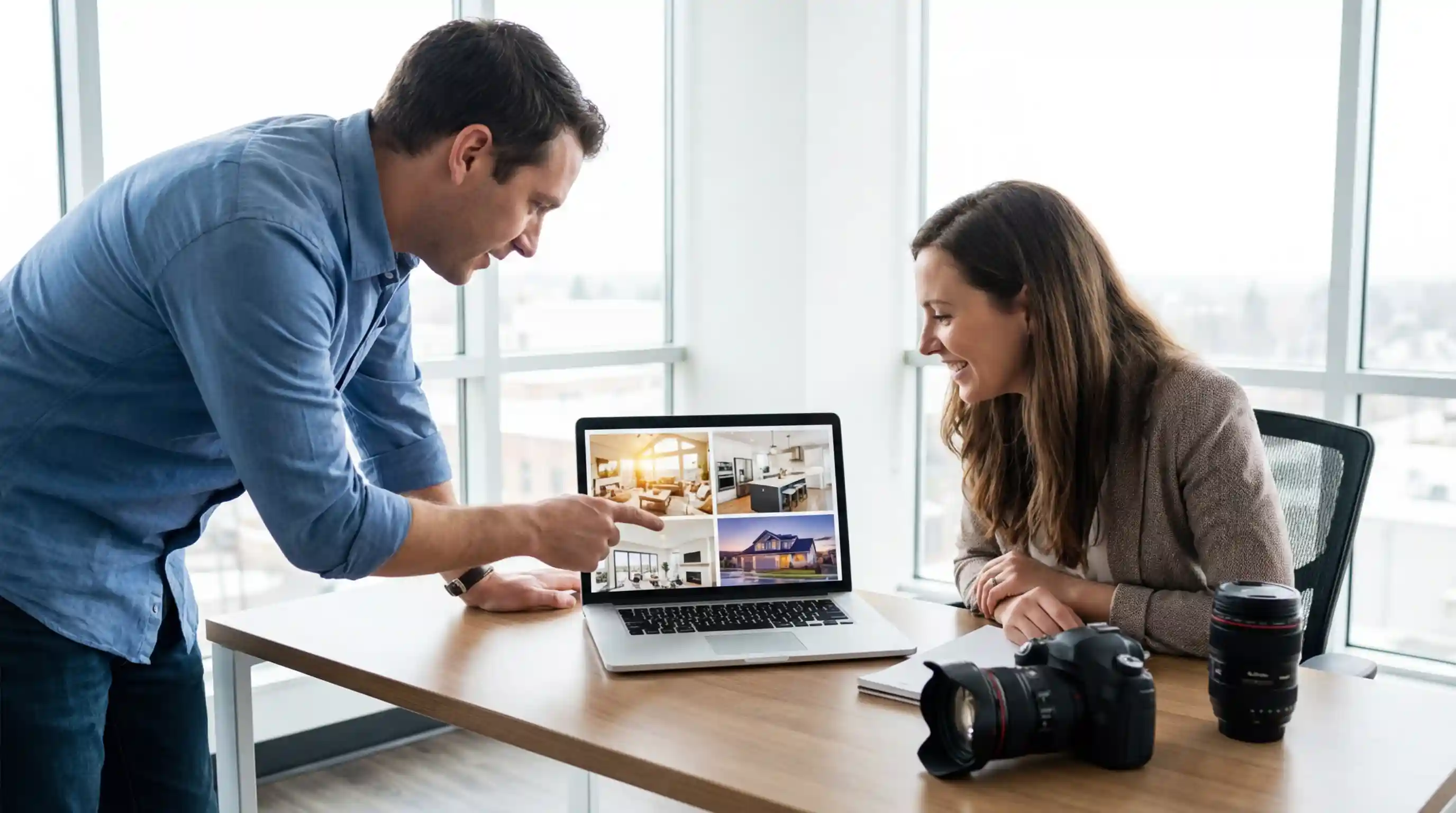
A real estate photography portfolio wins clients before you say a word. Agents decide in about ten seconds whether you know how to shoot a property. And you do not need a single paying client to build one worth showing.
Most photographers get their first 15 to 20 portfolio-quality shots in a single weekend: their own home, a few open houses, and a handful of model homes. The barrier to starting is lower than most people think.
This guide covers how to build your portfolio from scratch, how to curate it so agents respond, and one service addition that consistently separates photographers who get repeat bookings from those still cold-emailing. For the full business-building picture, see our guide to getting real estate photography clients.
What Real Estate Agents Actually Look for in a Portfolio
Agents do not evaluate photography portfolios the way a photo editor does. They are not weighing artistic merit. They are asking one question: does this photographer make listings look better than my phone does?
The signals that answer yes are practical. Bright, airy interiors with accurate white balance. Straight vertical lines on door frames and walls. A clean exterior shot that shows the full facade without a car blocking the driveway. If your portfolio checks all three, you are ahead of most photographers reaching out to local agents.
What many photographers miss is service range. Agents who have been burned by a photo-only package and then had to scramble for a video crew remember that experience. A portfolio showing photos and a listing video from the same shoot tells an agent you are a one-stop provider. When three photographers have similar photo quality, that distinction closes the decision.
How to Get Your First Portfolio Shots Without a Paying Client
Every working real estate photographer started with zero clients. The fastest path through that gap is to create portfolio material yourself rather than waiting to be hired.
Start with your own home. This is practice, not portfolio material yet. Use it to dial in your camera settings, practice leveling the tripod, and figure out how to expose for bright windows without blowing them out. Shoot every room. Edit everything in Lightroom. Then shoot it again.
Visit open houses in your market. Realtor.com shows open houses by neighborhood. Pick three to five on a Saturday morning. Introduce yourself honestly: you are building a photography portfolio and would like to shoot the kitchen or living room. Most agents say yes. These houses are already staged for showings, so the rooms look good without any prep from you.
Spend a Sunday at model homes. Home builder websites list model home addresses and hours. You can call ahead or just show up. Model homes are professionally staged and almost always empty. Sales agents are typically happy to let you shoot as long as you do not get in the way. Ten model homes in a single afternoon can generate more usable images than most photographers collect in their first month of paid work.
By the end of the weekend, you should have 40 to 60 edited images to choose from. That is more than enough to build a strong portfolio.
How to Curate What Goes In
Fifteen to twenty images is the right portfolio size. Not fifty. Not a hundred. Agents reviewing photographers are scanning quickly, and a long portfolio does not signal quality. It signals that you cannot edit your own work.
Select images across four categories:
- Exterior shots. Include at least three different facades, ideally across different architectural styles or property sizes.
- Kitchen and main living areas. Buyers make decisions based on these rooms, and agents know it.
- Master bedroom and bathroom. Clean, bright, properly exposed. Nothing elaborate required.
- One twilight or dramatic lighting shot. This shows range and separates you from photographers who only shoot midday exteriors.
Apply the same editing approach to every image in the portfolio. Consistent white balance, matched brightness levels, straight verticals throughout. Clients notice inconsistency even when they cannot name what bothers them. A portfolio that looks like three different photographers shot it raises doubts.
Remove anything that is almost good. If you look at an image and think "it is fine," cut it. Twelve excellent photos outperform twenty decent ones every time.
Building Your Online Portfolio
The portfolio needs to live online before you contact a single agent. If someone searches for you and finds nothing, the conversation is over before it starts.
You do not need a custom-built website. Squarespace and Format offer clean photography portfolio templates that look professional without much setup. Zenfolio is built for photographers and includes client gallery tools. Pick one and get it live within a week.
The pages your site needs are minimal. A home gallery showing your strongest 15 to 20 images. A services page listing exactly what you offer, including delivery timeframe and file format. A contact form or direct email. A short about section with your name and location so search engines can find you for local searches.
Consider including pricing or a pricing range. Many photographers avoid this, but agents who want to hire quickly look for photographers they can evaluate without a phone call. A visible starting rate removes friction. For guidance on how to structure your rates, see our real estate photography pricing guide.
Add Listing Videos to Separate Yourself

Here is where most photographers stop, and where the real opportunity sits.
Buyers expect video. Listings with video consistently generate more inquiries than listings with photos alone, and agents who cannot offer video are losing listing presentations to agents who can. But most real estate photographers only deliver photos, because video production feels complicated or requires equipment they do not own.
That gap is the opportunity.
Amplifiles is an AI-powered tool that converts listing photos into professional 1080p marketing videos in approximately 5 minutes. It adds voice-overs, captions, and branding automatically. The cost is $1.50 per image, and no filming or video editing is required. A photographer who already has the listing photos can produce a polished video the same day, include it with the delivery, and charge a meaningful premium for the service.
This is not a minor differentiator. Agents who find a photographer who delivers photos and video in one package do not switch providers. The combination solves two problems at once and removes the hassle of coordinating with a separate video crew.
Unlike general-purpose video tools like Animoto or Canva that require manual assembly and are designed for social clips, Amplifiles is built specifically for real estate listing videos. It understands property photo sequences, outputs the correct resolution and format for listing platforms, and delivers in minutes rather than hours. You can learn more about how it works on the Amplifiles photographer page.
Add two or three listing videos to your portfolio alongside the photos from those same properties. If you do not have client listings yet, create sample videos from your model home or open house shots. The video quality is identical regardless of whether the listing is currently active.
How to Get Your Portfolio in Front of Agents
Once the portfolio is live, the outreach is simple. Look up agents in your target zip codes on Realtor.com or Zillow. Find their contact email on their profile page. Send a short email with your portfolio link, your turnaround time, and your starting rate. Nothing longer than four sentences.
You are not trying to persuade anyone with a wall of text. The portfolio does the persuading. The email gets the link in front of them.
Attend local real estate office meetings if you can get an introduction. Agents share photographer recommendations within offices. One agent who books you and likes the results will tell three colleagues. That is how photography businesses grow in practice, not through sustained cold outreach.
List your business on Google Business Profile and on photography directories. Agents in suburban markets actively search for photographers, and the local competition is often thin. A complete Google profile with a few client reviews will put you in front of agents before they start comparing portfolios at all.
For a complete breakdown of outreach tactics, read our real estate photography tips guide.
Frequently Asked Questions
How many images should a real estate photography portfolio have?
Fifteen to twenty images is the right target. That is enough to show range across property types and room categories without padding the portfolio with mediocre shots. Agents scan portfolios quickly. A tight collection of consistently excellent images reads better than a long gallery with filler. When in doubt, cut rather than add.
Do I need a professional camera to build a real estate photography portfolio?
A DSLR or mirrorless camera with a wide-angle lens in the 16-24mm range is the standard real estate setup. You do not need the most expensive body. A used APS-C camera and a quality wide-angle lens produce portfolio-quality images. Your tripod, your lighting technique, and your editing workflow matter more than the camera body you are shooting with.
Can I add real estate videos to my portfolio without owning video equipment?
Yes. Amplifiles converts listing photos into professional 1080p marketing videos with voice-overs and captions. It processes photos in approximately 5 minutes at $1.50 per image, which means a photographer with an existing set of listing photos can generate a portfolio-ready video the same day without any filming. New users get 1,200 free credits to start.
How do I get my first real estate photography clients after building a portfolio?
Cold outreach to agents in your target area is the most direct path. A short email with a portfolio link, your turnaround time, and your starting rate is enough to start conversations. Open house visits, local real estate office introductions, and a Google Business Profile all generate inbound leads over time. The portfolio itself is the deciding factor. Agents make judgments fast based on the first images they see.
What should a real estate photography portfolio website include?
A gallery of your best 15 to 20 images, a services page with your delivery timeframe and file formats, a contact form, and a location-specific about section. If you offer listing videos alongside photos, include video examples next to the photos from the same property. This shows the agent exactly what a full package delivery looks like. Squarespace, Format, and Zenfolio are all solid hosting options for photographers.
Final Thoughts
Your first 15 portfolio shots are closer than they feel. An afternoon at a few open houses and a Sunday at model homes gets you there. The real edge comes from going further: adding listing videos to your offering while most photographers in your market are still photo-only.
We built Amplifiles for real estate photographers who want to add professional video without adding filming equipment or editing time. Upload your listing photos and receive a branded 1080p video with voice-over in about 5 minutes. Browse real estate video examples to see what a finished listing video looks like, or go straight to how Amplifiles works for photographers and start with your 1,200 free credits.