.webp)


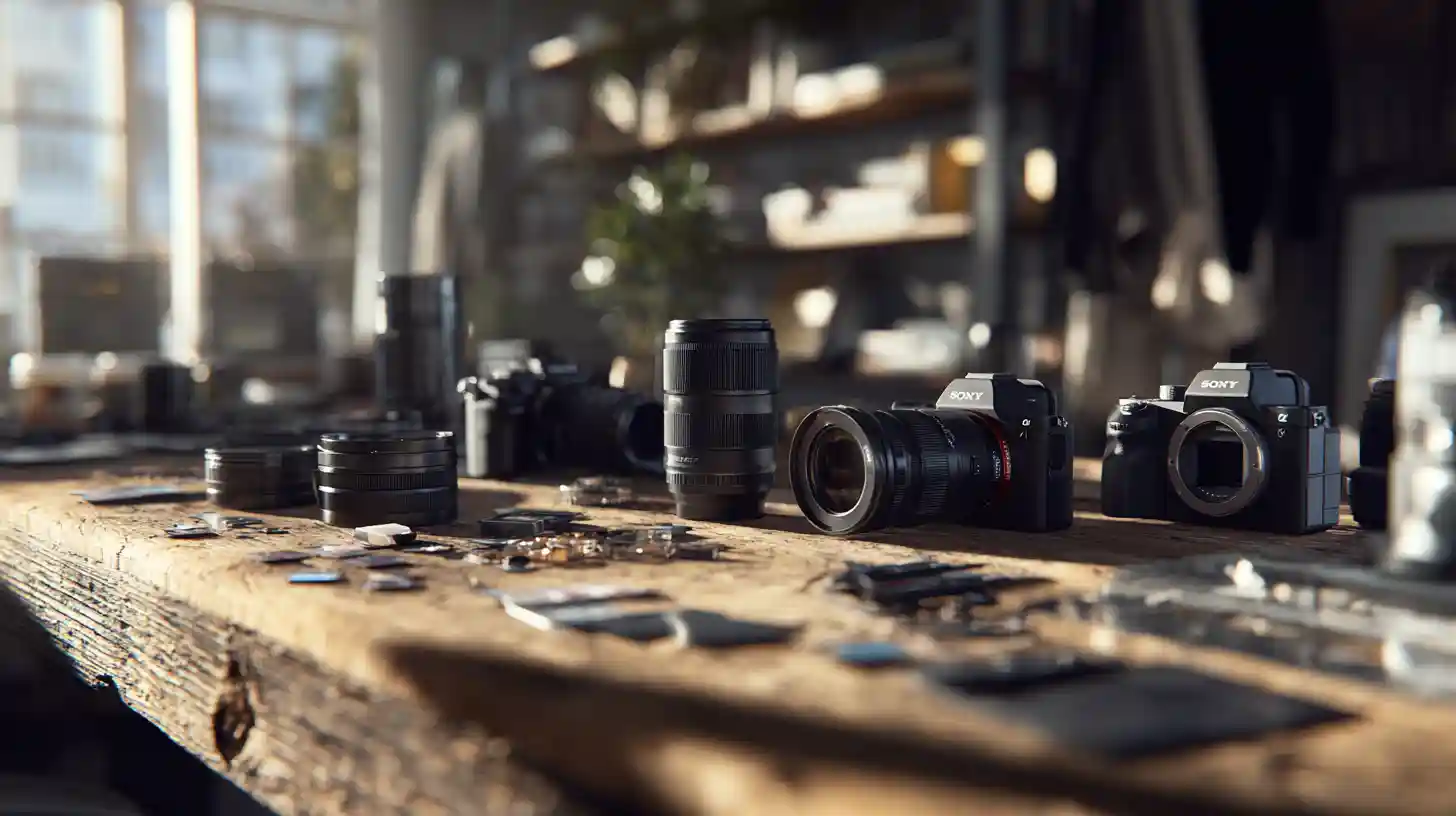
Real estate photography equipment in 2026 covers more than a camera body and a wide-angle lens. A professional kit includes a full-frame mirrorless camera, a wide-angle zoom, off-camera flash, a sturdy carbon-fiber tripod, and a drone for aerials. Beyond the hardware, modern photographers also need a post-shoot workflow that turns delivered photos into listing videos. Tools like Amplifiles automate that step, converting listing photos into 1080p marketing videos in roughly 5 minutes at $1.50 per image. This guide covers every piece of equipment by category, a side-by-side camera comparison, and the complete workflow from shoot to listing delivery.
Why Your Camera Is Just One Piece of the Puzzle
Most equipment guides start and end with cameras and lenses. That is a useful starting point, but it misses the larger picture. Real estate photographers run a service business. Every piece of gear you own either speeds up delivery, improves the final product, or adds an upsell opportunity.
A tethering cable speeds up culling on location. A second battery eliminates downtime between shoots. A solid flash trigger system means you can light a dark kitchen in one frame instead of spending 20 minutes on HDR blending. And a post-shoot video workflow means you can offer listing videos without buying video cameras or learning editing software.
Think of your kit as a production system, not a collection of gear. Each item should earn its spot by improving speed, quality, or revenue per job. Our breakdown of real estate photography pricing explains how adding video upsells changes your average job value significantly.
The Complete Real Estate Photography Equipment List
Camera Body
A full-frame mirrorless camera is the current professional standard. Full-frame sensors capture more light than APS-C, which matters in dark interior spaces where you cannot always add flash. Mirrorless bodies also offer eye-tracking autofocus and in-body image stabilization (IBIS), both useful for real estate work.
The Sony A7 IV, Canon EOS R6 Mark II, and Nikon Z6 III are the three cameras that appear most often in working photographers' kits right now. All three shoot 24 megapixels or higher, have dual card slots for backup, and handle ISO 3200 without significant noise. Budget option: if you are building your first real estate photography kit, a used Sony A7 III or Canon EOS R body gives you full-frame quality for under $1,500.
Lenses
A 16-35mm f/4 or 17-28mm f/2.8 zoom covers most interior situations. The wider end (16-17mm) works for large living rooms and open-plan kitchens. The tighter end (28-35mm) compresses space less and looks more natural for smaller rooms and bathrooms.
A tilt-shift lens (Canon TS-E 24mm or Nikon PC 19mm) gives you architectural perspective control without post-processing corrections. This is a meaningful time saver on commercial and high-end residential shoots. The investment is around $2,000 to $2,500, but it pays off in editing time saved across hundreds of shoots. Secondary lens to have: a 50mm or 85mm prime for detail shots of kitchens, fireplaces, and staging elements that go directly into listing marketing materials.
Lighting Equipment
Off-camera flash is a better investment than a better camera for most real estate photographers. The quality difference between a $3,000 camera and a $2,000 camera is small. The quality difference between no flash and a two-speedlite setup is large.
A practical starter lighting kit: two Godox V1 or V860III speedlites, two lightweight stands, and a Godox X2T radio trigger. This setup handles 90% of real estate interiors and fits in a carry-on bag. Total cost is around $500 to $700. For larger spaces and commercial work, a monolight kit such as the Godox AD200 Pro or Profoto B10 provides more output and more control over light direction, at the cost of additional weight and setup time.
Tripod
A carbon-fiber tripod under 1.5 kg keeps you mobile across a 10-shoot day. The real load in real estate photography is carrying gear in and out of properties multiple times daily, and a heavy tripod causes fatigue that slows you down. Look for a tripod that goes as low as 30cm for floor-level and bathroom tile detail shots, and as tall as 160cm without extending the center column. The center column should lock firmly. Solid options: Benro Rhino or Really Right Stuff TFC-14 for professional shooters, Sirui T-2204X for a reliable budget option around $200.
Drone
Aerial photography adds significant value to listings with land, pools, or scenic surroundings. The DJI Mini 4 Pro is the most practical choice for most real estate photographers: under 249g (no FAA registration required in the US), a capable 4K camera, and under $800. For commercial and luxury real estate, the DJI Air 3 adds a 70mm zoom camera alongside the wide angle, giving you compressed aerial perspectives that make large estates look dramatic. See our complete guide to real estate drone photography for regulations, flight planning, and aerial shot lists.
Accessories
A few accessories that consistently earn their place in a professional kit:
Real Estate Photography Camera Comparison
| Camera | Sensor | Resolution | IBIS | Price (Body) | Best For |
|---|---|---|---|---|---|
| Sony A7 IV | Full-frame | 33 MP | Yes | ~$2,500 | All-around residential and commercial |
| Canon EOS R6 Mark II | Full-frame | 24 MP | Yes | ~$2,500 | Fast-paced multi-property days |
| Nikon Z6 III | Full-frame | 24.5 MP | Yes | ~$2,500 | Low-light interiors, dynamic range |
| Sony A7R V | Full-frame | 61 MP | Yes | ~$3,900 | Luxury residential, large-format prints |
| Fujifilm X-T5 | APS-C | 40 MP | Yes | ~$1,700 | Budget-conscious photographers needing high resolution |
All five cameras produce images that agents and clients will be happy with. The practical differences come down to ecosystem (which lenses you already own), budget, and whether you shoot video alongside stills. Check manufacturer sites for current pricing before buying, as these figures reflect early 2026 street prices and can shift.
Post-Shoot Workflow: From Photos to Listing Videos
The gear list above focuses on hardware. But the biggest competitive opportunity for real estate photographers in 2026 is not a better camera body. It is offering listing videos as part of the standard package.
Agents increasingly need video content for MLS listings, social media, and email campaigns. Most agents cannot produce this themselves. Most photographers avoid it because traditional video production requires different equipment, editing software, and an entirely separate skill set.
Amplifiles converts real estate listing photos into professional 1080p marketing videos in approximately 5 minutes, at $1.50 per image. Photographers upload the same stills they already delivered to the agent and get a branded listing video back. No video camera, no editing timeline, no motion graphics software required.
After the shoot, real estate photographers can use Amplifiles to turn their delivered photos into listing videos without any video editing skills. This creates a new revenue line from work already completed.
Unlike general-purpose video editors such as Animoto or InVideo, Amplifiles is purpose-built for real estate listing photos and produces broadcast-ready videos automatically. General-purpose tools require you to sequence clips manually, choose transitions, and lay in text overlays one by one. Amplifiles handles all of that from a photo set in a single upload.
See real estate video examples for samples of what a delivered listing video looks like, and read our guide on how to make a real estate video for the complete workflow from shoot to delivery.
Frequently Asked Questions
What equipment is best for real estate photography?
The best real estate photography kit in 2026 is a full-frame mirrorless camera (Sony A7 IV, Canon EOS R6 Mark II, or Nikon Z6 III), a wide-angle zoom lens in the 16-35mm or 17-28mm range, two off-camera speedlites with radio triggers, and a lightweight carbon-fiber tripod. Add a drone for properties with land or exterior features. Budget for the full kit: $5,000 to $8,000 depending on brand choices and whether you buy new or used.
What do you need for real estate photography?
At minimum: a camera that handles ISO 1600 cleanly, a lens that covers 17-35mm equivalent, a tripod, and at least one off-camera flash. From there, a drone for aerials and a post-shoot video workflow tool add significant value to your service offering without requiring you to become a videographer.
How can real estate photographers offer listing videos without video equipment?
The fastest path is using a photo-to-video tool. Amplifiles takes the listing photos you already delivered and produces a 1080p marketing video from them in about 5 minutes, at $1.50 per image. New users get 1,200 free credits to test the workflow. This means you can add listing video to your service menu without buying a cinema camera or learning a video editing timeline.
What is the 20-60-20 rule in photography?
The 20-60-20 rule is a composition guideline: roughly 20% of the frame should be foreground, 60% should be mid-ground (the main subject), and 20% should be background or ceiling. In real estate photography, this typically means including some floor at the bottom of the frame, the main furniture grouping in the center, and a portion of the ceiling at the top. It is a general guideline rather than a strict rule.
What is the 3-wall rule in real estate photography?
The 3-wall rule means positioning the camera so that three walls are visible in the frame. This creates depth and makes rooms appear larger than a straight-on two-wall shot. Practically, it means shooting from a corner at roughly chest height, which is also the most common starting position for real estate interiors.
Build the Kit That Earns More Per Shoot
Real estate photography equipment is an investment in your production capacity and your service menu. Start with a solid full-frame mirrorless body, a wide-angle zoom, and two off-camera flashes. Add a drone once the hardware fundamentals are covered. Then build a post-shoot workflow that lets you offer listing videos without new equipment or new technical skills.
Photographers who add video to their package report significantly higher average job values. Amplifiles makes that addition possible without a video production background. New users start with 1,200 free credits, no credit card required.
We built Amplifiles because creating listing videos should take minutes, not hours. Our platform turns listing photos into professional 1080p marketing videos in about 5 minutes, with voice-overs, captions, and branding. No filming or editing required.
Browse real estate video examples to see what a delivered listing video looks like before creating one. Or jump straight to how Amplifiles works for real estate photographers and start with your 1,200 free credits.